Silver – “The Indispensable Metal”
Silver is a precious metal, and like gold, it has intrinsic value. Silver is widely perceived to be both a commodity and a form of money, and has been used as a medium of exchange for thousands of years due to its inherent value.
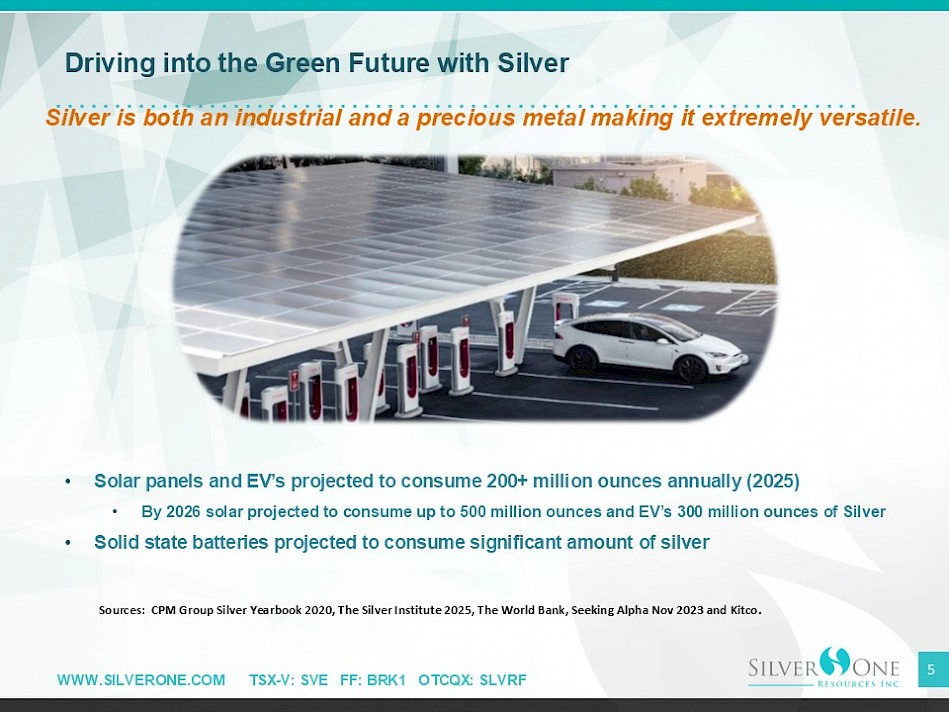
Today, silver’s primary use is industrial, whether being used in cell phones or solar panels; new innovations are constantly emerging to take advantage of silver’s unique properties.
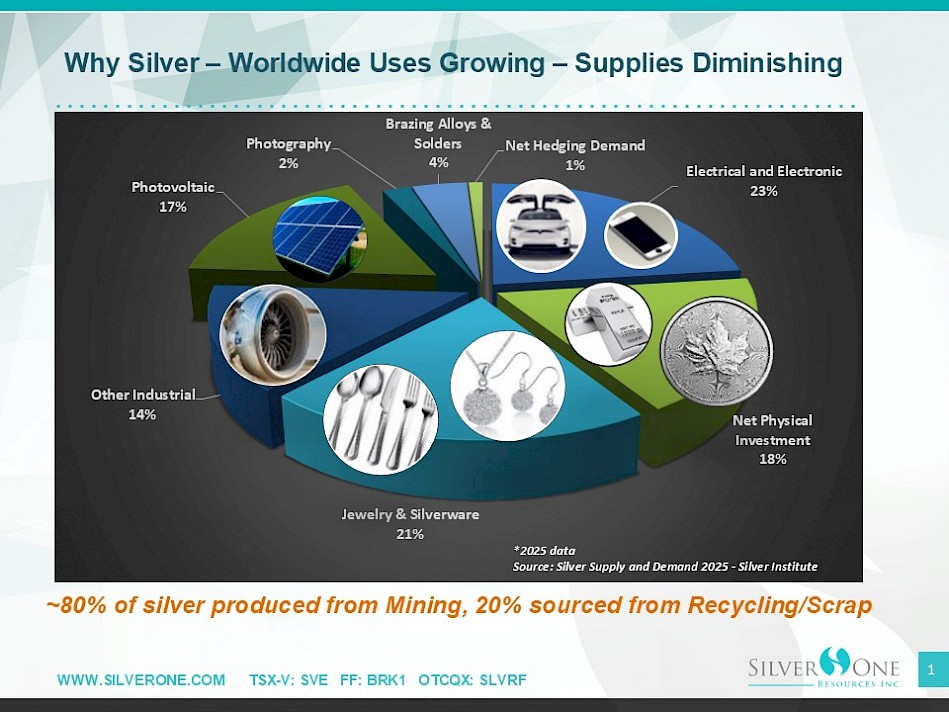
Silver is a noble metal that resists corrosion and oxidation. With the best thermal and electrical conductivity of all metals, silver is ideal for electrical applications. Its antimicrobial, non-toxic qualities make it useful in medicine as well as consumer products. The high lustre and reflective properties of silver make it perfect for jewellery, silverware, and mirrors. Its malleability allows it to be flattened into sheets, with ductility enabling it to be drawn into thin, flexible wire, making it the best choice for industrial applications. Additionally, its photo-sensitivity has given it a place in film photography.
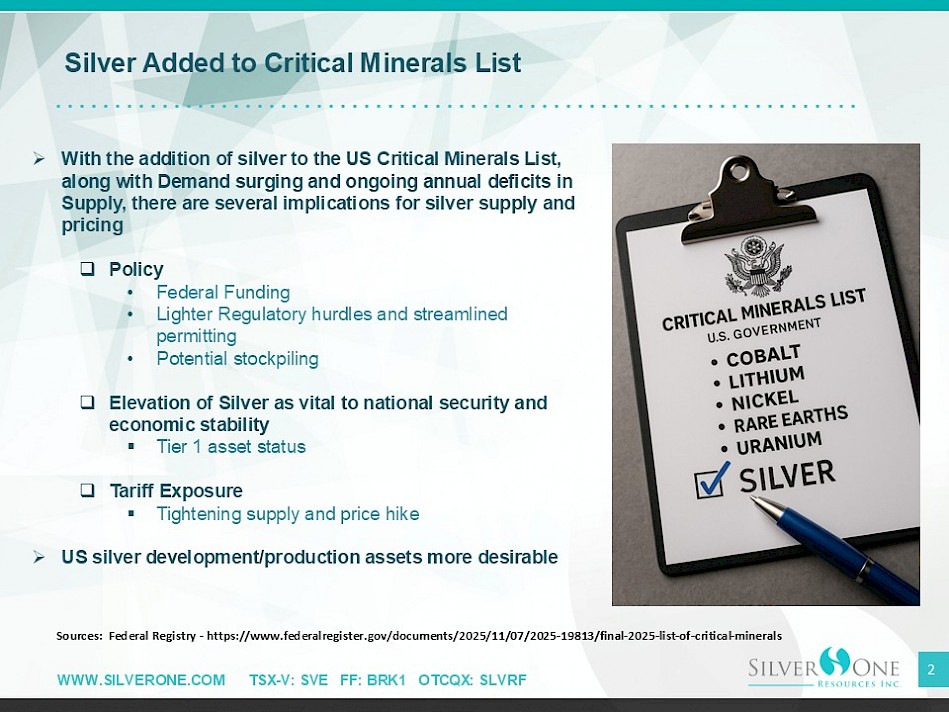
The U.S. government’s decision to add silver to its Critical Minerals List marks a major shift in how the metal is viewed within the global economy. Beyond its traditional role as a precious metal, silver is now being recognized as strategically important for advanced technologies, energy infrastructure, defense applications, A.I. - data centers, and long-term supply chain security. The designation is expected to increase attention on domestic silver development projects and strengthen the strategic value of high-quality silver assets as governments and industries work to secure a reliable future supply.
What is Silver used for?
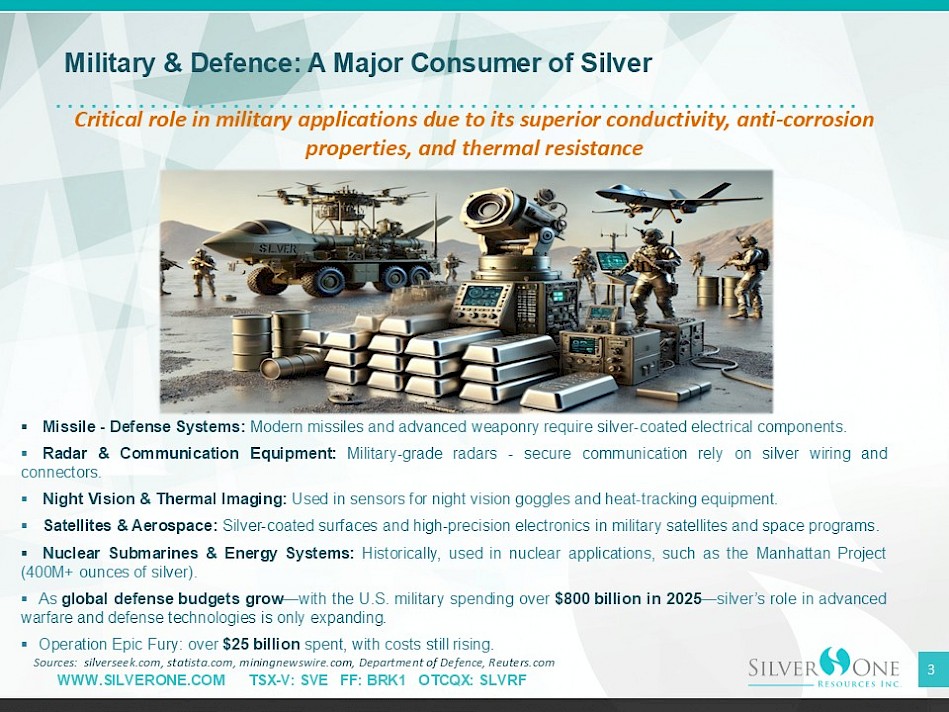
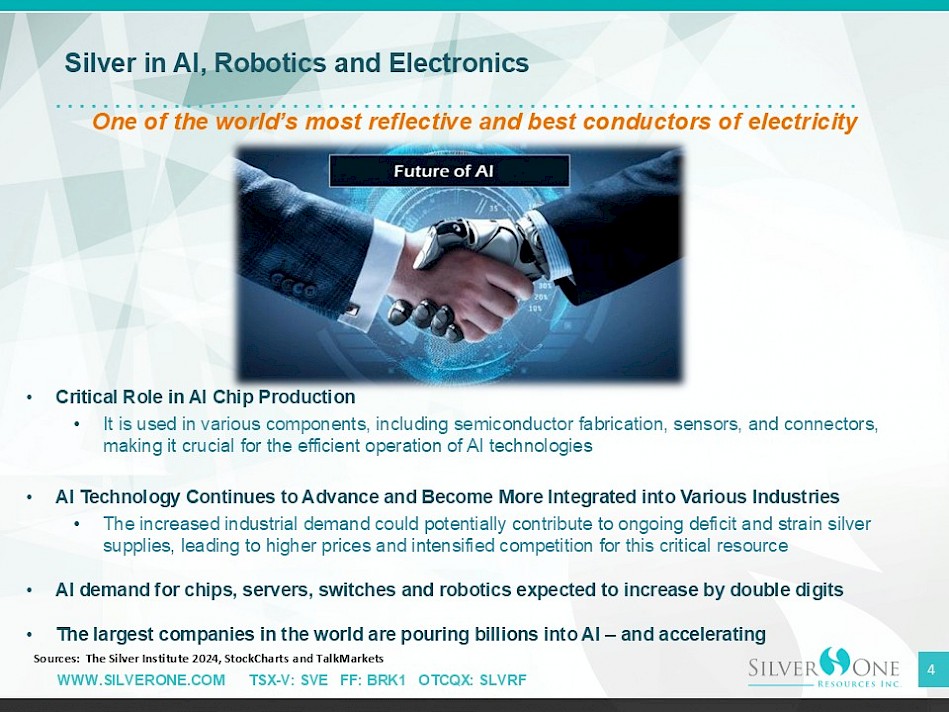
Silver is invaluable to solder and brazing alloys, batteries, dentistry, glass coatings, LED chips, medicine, nuclear reactors, pharmaceuticals, photography, RFID chips, semiconductors, solar energy, touch screens, water purification, wood preservatives, satellites, x-rays, military & defence, as well as numerous other industrial purposes. Washington-based industry group the Silver Institute calls it “the indispensable metal”.
Silver Supply, Demand & Deficits
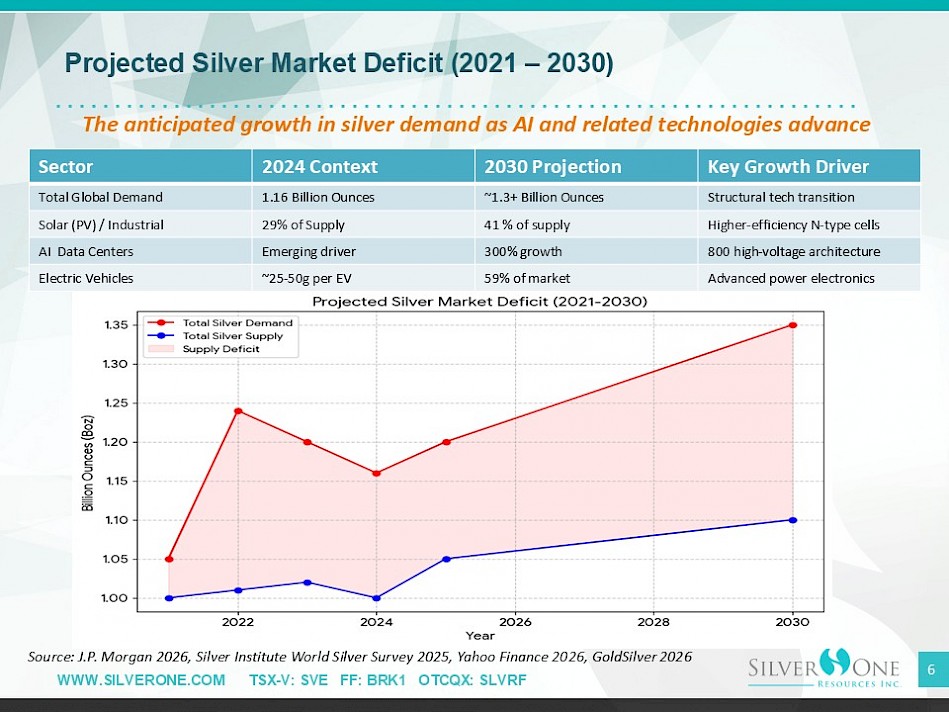
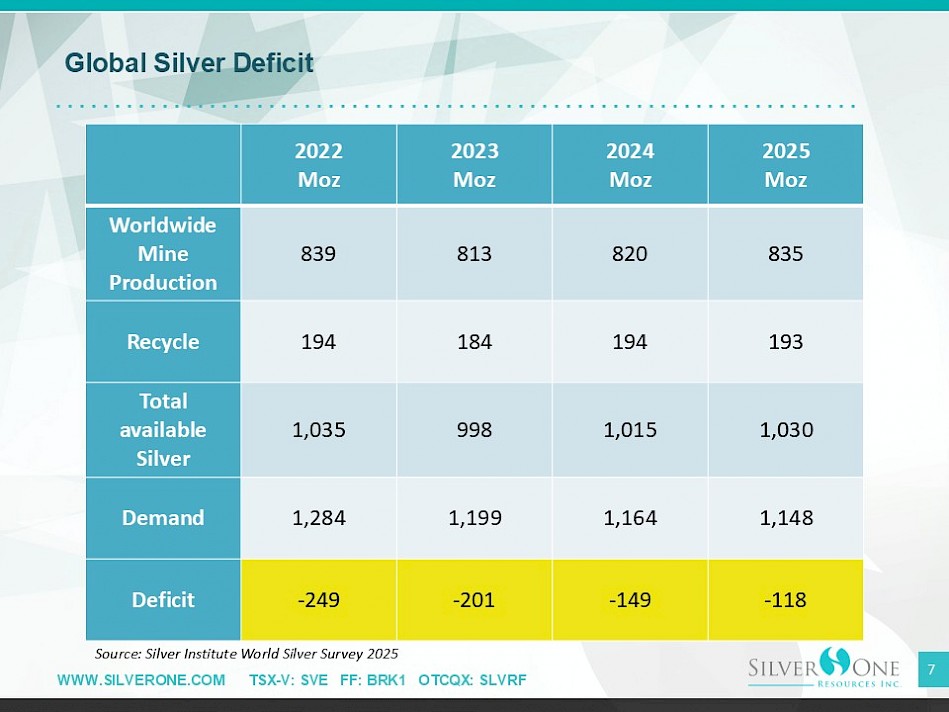
Silver market physical surpluses and deficits explain, and on occasion, influence the price, margins, premiums, and lead times. Physical surpluses and deficits are not the only influence on short term price fluctuations. Unlike solely industrial metals, there is also substantial demand for silver as a financial asset. In 2016, Exchange Traded Product holdings rose to a record high with approximately a fifth of demand for new silver generated by the physical silver coin and bar sector with investors increasing their private holdings.
Sources:
The Silver Institute 2025
World Silver Survey 2025
Geoscience News and Information
Thomson Reuters
CPM Group Silver Yearbook 2020
Kitco
The World Bank
J.P. Morgan 2026
Yahoo Finance 2026
GoldSilver 2026
Department of Defence
Federal Registry